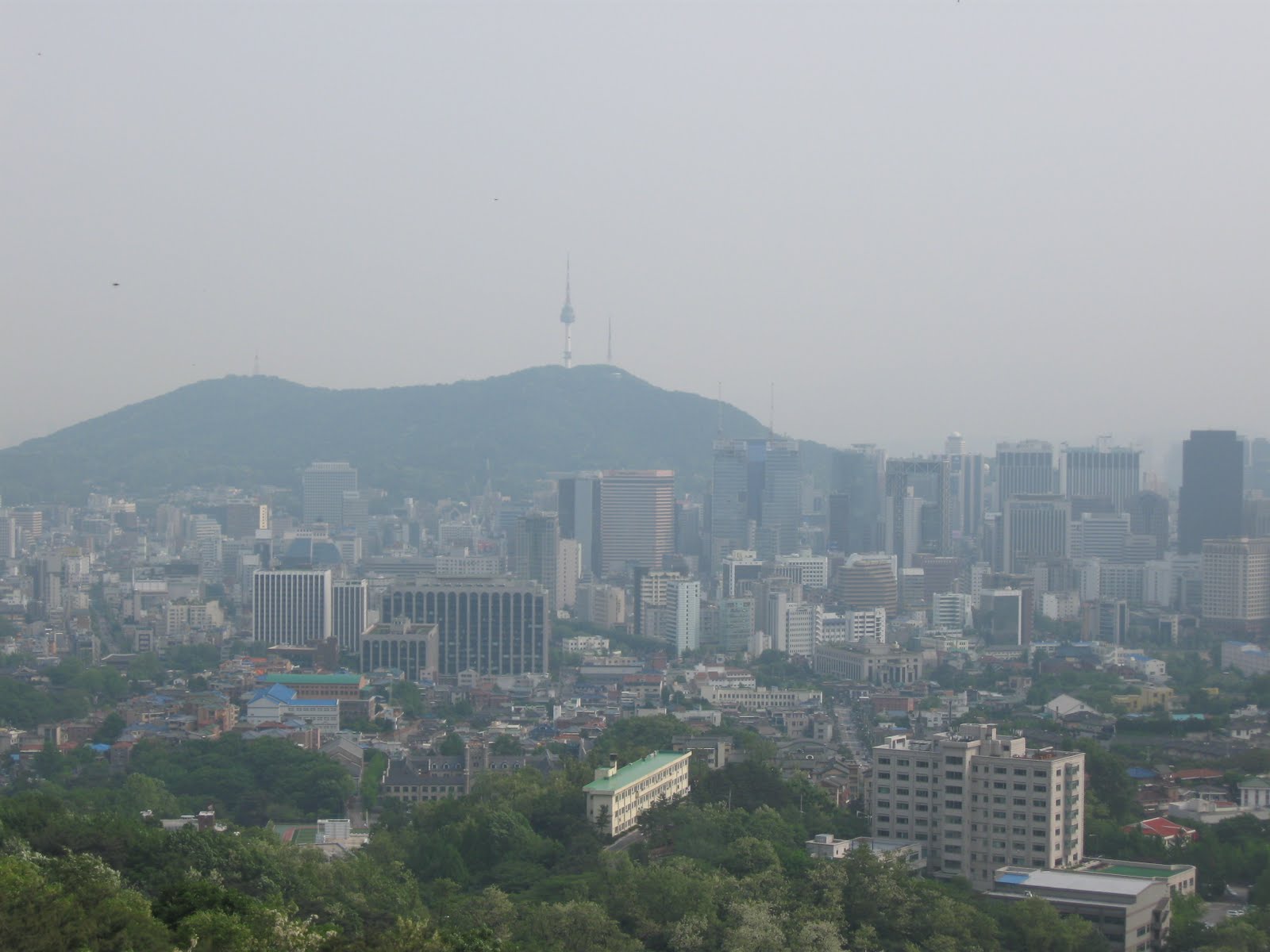
Tuesday, August 3, 2010

Japan Top Ten Part 1

Sunday I arrived back in Seoul after traveling through Japan for nine days. It was a whirlwind tour, which made for an extremely fast-paced for a vacation. That said, I don't think we could have done a better job of seeing the country in such a short time period. Rather than recount for you what I did day by day, I decided to take a different approach. I will do three posts on Japan each focusing on a different aspect of the trip and each in the form of a Top Ten list. This will make the blog posts more digestible (and hopefully more fun to read) for you. The first post will focus on "Temples and Shrines," the second on "Things We Did," and the third on "Japanese Culture and Quirks". Before starting, here is a brief itinerary of the trip:

Day 1 Arrive in Tokyo

Day 2 Depart Tokyo, arrive Kyoto

Day 3 Kyoto

Day 4 Side Trip to Nara

Day 5 Kyoto, Depart Kyoto, Arrive Kobe

Day 6 Depart Kobe, Himeji, Arrive Hiroshima

Day 7 Miyajima, Depart Hiroshima, Arrive Tokyo

Day 8 Tokyo

Day 9 Tokyo, Depart for Seoul

Top Ten Temples and Shrines

As Japan's most prominent historical and cultural landmarks, temples and shrines were a primary focus of our trip. Japan has two major religions: Shintoism and Buddhism. Buddhist places of worship are temples; Shinto ones, shrines. Throughout the course of the trip we visited roughly 25 temples and shrines. As historically and culturally significant as each one of these sites was, after seeing so many, you unfortunately become a bit desensitized to them. Thus what was at the beginning of the trip one of the most magnificent structures I've ever seen, became just another temple. That said, there are some that will take your breath away no matter how many other temples and shrines you've seen on your trip. These are the ones that made my top ten list. You may notice that a disproportionate amount of the temples on my list are from Kyoto. This is because the city served as Japan's capital from the end of the 8th Century up until 1868. The greater Kyoto area is home to 17 UNESCO World Heritage Sites, and we were lucky enough to get to see 11 in the 3 days we were there. Here are the top temples I saw in Japan:


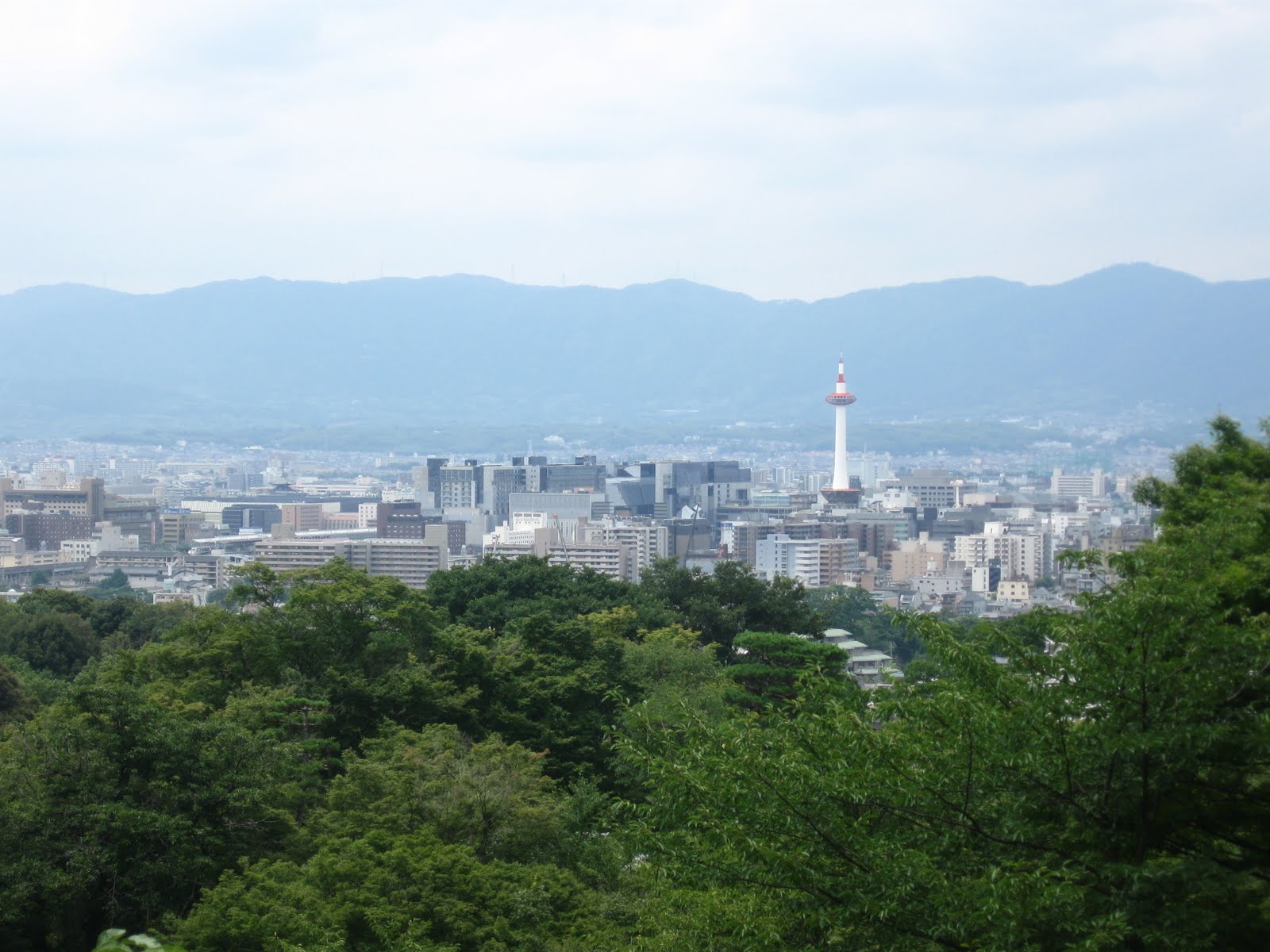
10.) Nanzen-ji Temple, KyotoNanzen-ji was founded in 1294. The massive sanmon gate pictured above is representative of many other gates at the entrances to other temples. This one, however, permitted you to go up inside of it. This provided us with scenic views of the temple complex and the forested mountains that surround it. The temple sits at the end of the Philosopher's Path, so named because a philosophy professor at Kyoto University used to walk it each day and to clear his mind and marvel at its beauty. The temple also features Roman-style aqueducts, a unique architectural feature in a country where pagodas and torii gates reign supreme.


9.) Byodo-in Temple, Uji (Kyoto Suburb)

After a side trip to Nara, we raced to this temple to get there before it closed. Fortunately, my travel guide was of by one hour (due to extended summer hours), and we had plenty of time to stroll through the temple's gardens and marvel at Phoenix Hall (the main hall). We were 15 minutes too late catch the last tour of the inside, but a nice museum gave us some context on the temple and displayed many small statues of Bodhisattvas floating on clouds. This is a common symbol in Amida Buddhism. Byodo-in is one of Kyoto's UNESCO World Heritage sites.


8.) Kiyomizu-dera Temple, Kyoto

While certain temples are often significant to various sects and branches of Buddhism, Kiyomizu was described by my Japan travel guide as a "temple that belongs to everyone," and it's not hard to see why. The temple was originally built in 798, but it's current form is a 1633 reconstruction. Kiyomizu means "pure water," and one of the major attractions is a spring which we partook from. According to Wikipedia (which I unfortunately had to consult due to my lack of photographic memory), the water has "therapeutic properties" and promotes "wisdom, health, and longevity." Also, the Japanese equivalent of the phrase "to take the plunge" is "to jump off the stage at Kiyomizu."


The impressive veranda overlooks Kyoto and the wooded mountains. The supports to the veranda were built without using any nails. Kiyomizu-dera is a UNSECO site.


7.) Daisho-in Temple, Miyajima Island


This is my "sleeper pick." The temple was barely a blip in my guide's section on Miyajima (an island off the coast of Hiroshima), yet was one of the most pleasant stops on our trip. It features myriad Buddha statues, impressive carvings, and a clear view over the island's other temples and the virgin forests of Mt. Misen. It is off the beaten path and is not swarming with tourists, which is another plus.


6.) Toji Temple, Kyoto

Yet another majestic Kyoto temple and UNESCO World Heritage Site, Toji features a five-story pagoda, which is the tallest in Japan. It was originally built in 826, but burned down due to lightning strikes on four separate occasions (that's form a brochure I picked up, not Wikipedia). The current pagoda was built in 1644, and is surrounded by a beautiful garden. We used the garden to sit and relax in, and we noticed these turtles trying to build a pyramid.


5.) Fushimi Shrine, Kyoto

The first Shinto Shrine to crack my list is Fushimi, built on the southern outskirts of Kyoto. The shrine honors Inari, the god of rice and sake. The grounds of the shrine feature halls of thousands of torii gates that you walk through on your hike up the mountain, most of which are donated by businessmen. As we learned later in the day from our tour guide in Nara, torii gates are characteristic of Shinto shrines because they allow crows to rest on them. In the Shinto religion crows are said to be messengers from god. We made a stop at this shrine early in the morning on our way south to Nara, so it was very peaceful and not at all crowded


4.) Ginkaku-ji Temple (The Silver Pavilion), Kyoto
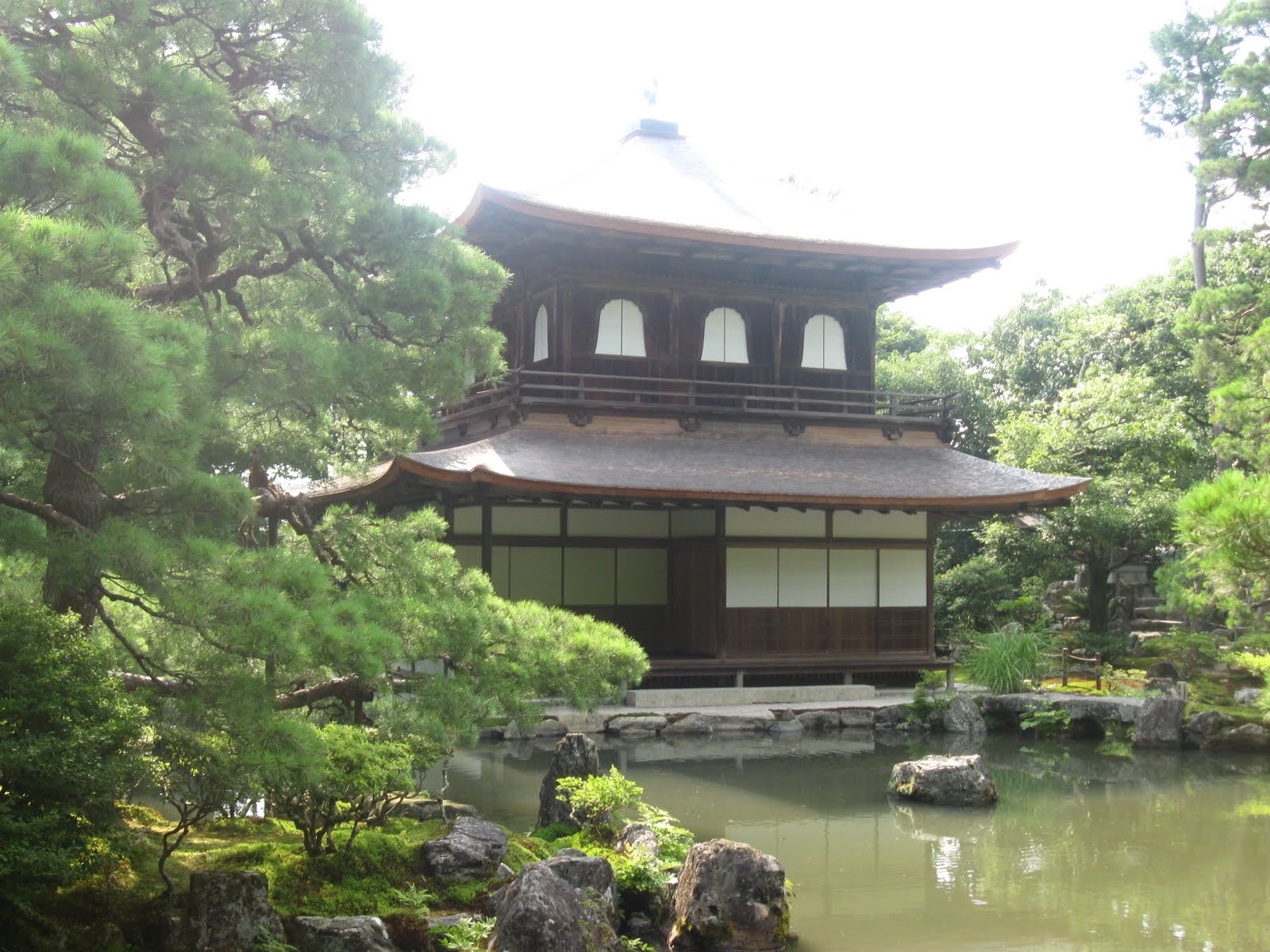


The Silver Pavilion of the Ginkaku-ji Temple never received its intended paint job, hence the misnomer. Nevertheless, the temple is beautiful in its simplicity and features some of the most delightful and stylistically diverse gardens of any of Kyoto's temples. It was built by a shogun in the 15th century as a villa that he could retire at. After his death it became a Zen Buddhist temple (a similar path to templedom to that of its cousin, Kinkaku-ji). The temple sits at the north end of the Philosopher's Path, about a mile from Nanzen-ji. Ginkaku-ji is yet another UNSECO World Heritage Site and it can be assumed that from here on out, the remainder of my list will be as well.


3.) Itsukushima Shrine, Miyajima Island


By far the most impressive shrine we saw on the trip was Itsukushima, built on the beach of Miyajima Island. When the tide is high, the shrine appears to be floating, but when the tide is low, the stilts supporting the shrine are revealed. One of the most iconic images of Japan is the torii gate that welcomes worshipers to the shrine. At high tide it stands majestically in the middle of the sea, but when the tide is low you can walk out to it. The tide was high when we were there, so we missed out on walking to it, but got some great pictures.


2.) Kikaku-ji Temple (The Golden Pavilion), Kyoto

I will shut up and allow you to enjoy these pictures.


1.) Todai-ji Temple, Nara


While other temples may have matched or even exceeded Todai-ji in beauty, nothing on the trip was as physically imposing or elegant. Todai-ji is the largest wooden building in the world, and even having read that ahead of time, I was still in awe upon seeing the temple. These pictures do not do the temple justice, but if you look very closely, you can see the people at the entrance, which provide a point of reference. The emperor of Japan ordered the temple built in 752, as a remedy to (or distraction from) economic and political strife throughout Japan. Shockingly, the original was 1.5 times larger than the present 1709 reconstruction. Nara, the temple's home, was the first capital of Japan. Kirk and Karl (and other former Age of Empires aficionados) may recognize the temple as the Japanese wonder.

The temple houses a Buddha statue that is over 50 feet tall. A man can fit in his palm. My photography does not do the statue justice either.
This first post was basically an excuse to show off the most impressive, beautiful, and historical sites I visited. The following posts will be more personal and provide more of a narrative of my trip.

Saturday, July 10, 2010

World Cup

Watching the World Cup in South Korea over the past month has been an incredible experience. Soccer is the top sport in Korea, followed closely by baseball. Any international athletics competition that features South Koreans is a national event for the country. During the Winter Olympics, the entire nation went crazy over Kim Yuna. Koreans take tremendous pride in their accomplishments and successes, no matter what the sport. Many Koreans know and love the NFL player Hines Ward, whose mother is Korean, though they do not care much for the NFL on the whole. The point I'm making is that when any Korean succeeds athletically, the entire nation celebrates. There is simply nothing like this in the US. Ann Arbor will erupt if Michigan wins, East Lansing will riot if State wins or loses, but there is no event that brings the whole country together. The World Cup takes this national outpouring to a whole new level. A few other teachers and I caught World Cup Fever early when we went to see a friendly match between South Korea and Ecuador in May. I'm wearing the jersey of Korean sensation Park Jisung, who plays for Manchester United. I didn't get the memo that you are supposed to wear red though.


Though Korea made an exit in the first round of the elimination stage, watching has been lots of fun. Because I have devoted most of my weekends to watching soccer and staying up into the wee hours of the morning, I have not had time for as many cultural/historical excursions this month. The way I see it though, watching the World Cup in a country that cares about soccer is a cultural event unlike any other.


Celebrating Victory Over Greece

South Korea's first game was against Greece. We decided to try to watch the game at a bar in the midst of frantic Koreans instead of watching at any of our places. About an hour or an hour and a half before game time we set out to find a bar. Each bar we found was "reservation only." There are at least a hundred bars/pubs/Korean BBQ joints close to the area I live, and they were all booked. Most had signs out front in Korean, but we quickly figured out that these signs were saying that there was no room. After searching for an hour, game time was quickly approaching, so we settled on an expat bar near in our area. We watched Korea's first game with a bunch of other white people who were all cheering for Korea. It was fun, but naturally atmosphere wasn't quite what we had hoped.

Korea knocked off Greece 2-0, and chaos ensued. Everyone poured into the streets simultaneously to celebrate. We were all wearing our Korean team garb, which amused every Korean that walked by us. Many slapped us high fives as we passed. We participated in and even started chants of "Dae Han Min Guk" (South Korea in Korean).


Immediately after the game people took over the main street passing through my neighborhood, a five-lane-on-each-side boulevard. Traffic stopped and one guy even climbed on top of a bus. Unfortunately, the picture I snapped didn't turn out well, but I got an OK picture of an imitator who climbed on a bus stop.


We took some time to enjoy the celebration, but had to change at get ready for US-England, but more on that later.

Argentina Game

Determined not to make the same mistake as the Greece game, we decided to watch the Korea-Argentina at an outdoor venue a couple stops down the subway. On the way to the subway station, we passed a promotion for Max Beer (a Korean beer). When Koreans promote a product they have a tendency to do these over-the-top, grassroots promotions. Beer companies, even before the World Cup, lead small parades featuring 15-20 member marching bands and beautiful women. This particular promotion was particularly outlandish, but lots of fun.


We watched the game outside COEX, which is a massive underground mall near Seoul's World Trade Center. A five lane boulevard similar to the one near my house was entirely blocked off to form a sitting area, but we found a nice spot to stand on high ground. As far as the eye could see people were dressed in red and several giant TV screens were set up specifically for the game.

Because red is one of their colors, many Koreans have taken to wearing Halloween-style devil horns that light up when you put them one your head.


Unfortunately, South Korea was clobbered by Argentina, 4-1. I missed the Nigeria game because it was on at 3:30 AM on a school night, but a 2-2 tie sent South Korea to the next round.

Uruguay Game

Despite bad weather, we returned to COEX to watch Korea take on Urugauy. Many Koreans had bought ponchos, but the weather cleared up as the game started.

This time, we found a spot in front of one of the giant television screens mounted on a building. There are literally tons of these screen mounted buildings in Seoul, and when the World Cup is not on, they run advertisements.

The crowd erupted when Korea scored to tie the game at one, but that was their only goal and Korea was eliminated with a 2-1 loss.


US-England
On the second day of festivities, after watching Korea play, we headed to the foreigners' neighborhood called Itaewon. We watched US-England at an expat bar that had a good mix of Americans and Brits. The game started at 3:30 AM, and I'm sure all of you know the result. One of the other teachers from Canada has English parents, so he was pretty upset. Two grown Englishmen were so angry that they almost got in a fight with each other (I'm sure that would not have happened had England been ahead). By the time the game was over it was as bright as day. It's not the best feeling in the world to be leaving a bar when it is bright out, but I had bracketed off the entire next day to sleep. We stopped at McDonalds for breakfast before heading home, but I was disappointed to learn that Korean McDonald's don't have biscuits or McGriddles. I guess corn syrup and maple flavoring infused breakfast sandwiches haven't caught on here yet.


My Class Catches World Cup Fever

In the course of one weekend (the weekend of the opener when Korea beat Greece 2-0) my kids went from not knowing what the World Cup was to being soccer crazy. For the past month, they have been playing soccer with a balloon during play time. The game is very slow paced (balloons don't travel fast) and they all follow the balloon around in a huge clump. If I'm not busy grading or preparing lessons sometimes I will jump in and say, "I'm Nigeria!" (or whomever the next opponent is).

Dominic makes a move.


Christine with the save!

I will be very busy over the next three weeks. Next weekend I am going to Mudfest and the next week I am headed to Japan for a nine day vacation. I will be sure to post after each event.

Monday, June 28, 2010

Musical Chairs Mayhem

Musical Chairs Mayhem

Sadly, two weeks ago Dominic enrolled at an international school (he was born in the US, so he has dual citizenship), thus he is no longer in my class. When I heard he was leaving I knew I had to capture a game of musical chairs on video. It is the kids' favorite game and when we play the stakes are pretty high. The winner takes home a GDA sticker, which, in the eyes of a six year-old, is priceless. I decided to provide some highlights for your viewing pleasure, along with in-depth analysis. In this post I'll put on my sportscaster hat and attempt to dissect some of footage and provide background on some of the top players.

Dominic Taunts


Part of what makes Dominic a strong musical chairs contender is his ability to get inside the head of other players, flustering them and giving him the psychological edge. Throughout this video you can hear Dominic talking smack to Eena in Korean. This makes it hard for Eena to focus on her game plan. This video also contains Dominic's classic "Thinker" move. I'm not sure if it's meant intimidate opponents or distract them, but it seems to work quite effectively. It's moves like this that make Dominic a perennial contender whenever we play musical chairs


Touchdown Dance


While clearly a talented player, Dominic takes many risks throughout the course of the game. "The crawl" is perhaps the most salient example of such risky play. You may also have noticed that Dominic has perfected the art of the "touchdown dance," which he employs before sitting down when he knows that his opponents can no longer reach him.

Dominic's top two adversaries are Justin and Harry, both of whom feature a more cool-headed approach to the game. Justin is the classic Steve Yzerman-type player. He follows the rules of the game and succeeds through his hard work and dedication to the sport. Harry is a very sly player, and knows how to push the rules and bend them to his favor. He knows when the ref is watching closely (and when he's focused on filming). Harry is the player that walks around putting his hand on each chair, taking advantage of the poor officiating. Both players are forces to be reckoned with and highly competitive. They have yet to finish out of the top three, which is quite a feat. Despite being extremely friendly off the court, Harry takes it personally when he loses, and often appears dejected for the remainder of the class. Harry lives the words of the great Vince Lombardi: "Winning isn't everything it's the only thing."

Photo Finish


In this final clip, Dominic's risky style of play catches up to him. "The Crawl Move" fails, and Dominic finds himself in a heated battle for the last chair. While Dominic has a huge upside, his fundamentals clearly need improvement. Unfortunately, musical chairs officiating does not make use of instant reply. If I remember correctly, the referee invoked Article III, Section 2 of the rule book and called for a do-over. After re-watching the highlight, I think the ref got it right. While Dominic has the required two cheeks down, he clearly pushes off.

Monday, June 7, 2010

More Adventures in Seoul

Samcheong Park and Samcheong-dong

After spending several months living in what seems like a maze of buildings, lights, and roads, Alexa and I decided that it was time to check out a park in the northern outskirts of Seoul. It was called Samcheong Park, and it was pretty much the first green I have seen in months (outside of a few tree-lined streets and Yuedio Park back in April). It was wooded and had trails that could be walked, though many of the trails were paved. We hiked the trails up to the top of the mountain. There were some very nice views at the top. Seoul is surrounded by mountains and many of these were visible. There was an old city wall winding its way through the mountains, and we even passed a manned lookout post for the South Korean army.


I was able to get my first shots of Seoul from above. This is downtown northern Seoul (below), and you can see Namsam Mountain (from an earlier post) on the left. I live south of that mountain, across the Han River in Gangnam, which has emerged as a second downtown. On the right is Gyeongbukgung, the palace from another previous post.


After hiking down the mountain, we set out to look for a neighborhood of traditional Korean homes in the Samcheong-dong, which is a neighborhood just south of the mountain we had hiked. After reading about these homes in a tourist magazine for expats, we assumed these homes would be a historical (it annoys me when people say an historical) tourist site. There was literally no one walking around in the first alcove of homes we came across, and it was obvious that people were still living in them. It felt awkward walking up to the homes, snapping pictures, and walking away. I was hoping that we wouldn't run into any of the owners the whole time we were in that area. We eventually found the more touristy, much larger neighborhood, but it was still just that, a neighborhood. Koreans wander the alleys, checking out homes that have been in tact for about 75-100 years, but that are, for the most part, still inhabited. Many of the homes had garages, and the homes had electricity and other modern conveniences. In the U.S., homes like these would be bought up by a historical society, or used as a tourist attraction, like Greenfield Village. It seemed very odd that someone's home could be a tourist attraction, but I enjoyed getting lost in the crooked alleys.


Hangang Park

Hanggang Park is a park about a mile or mile and a half north of where I live along the Han River. It was more of a wide-open space, as opposed to the wooded Samcheong Park. It provided a nice view of the southern side of Namsam Mountain, so hopefully you can get some feel for the geography of the city. Keep in mind that Seoul has a second downtown south of where I'm standing while taking the picture. I also got a shot of one of Seoul's bridges that has fountains shooting out into the river. I didn't get very close though, so the shot wasn't great (that's why I didn't post it). The bridge lights up at night, and it is supposedly quite a sight. It was very relaxing just to lay out a towel riverside and read a book for a hour or two.


Changdeokgung

Changdeokgung is another royal palace built by the Joseon that ruled Korea from about 1400 up to its surrender to the Japanese in 1910. Gyeongbukgung is the most expansive palace, and was initially the primary residence of the royal family. Then in the late 1500s the Japanese burned all of the palaces down, and Changdeokgung was the first to be rebuilt (there is kind of a recurring theme in Korean history of the Koreans building cool things and the Japanese burning them down). It then became the primary residence of the royal family until that last king capitulated. Even though it is not a spectacular as Gyeongbukgung, it is the most well-preserved, hence the only palace in Seoul that is a UNESCO World Heritage Site. Below is a shot of the main hall as well as a shot of its inside. The palace complex also includes a supposedly beautiful "Secret Garden," but it costs an extra 5,000 won (about $4-5), and you can only enter if accompanied by a tour guide. By the time we came to the garden, the last English tour had departed, so we decided to save the gardens for another day rather than pay for a tour in Korean.


Insa-dong

Insa-dong is a small, 2-3 street area in northern Seoul that features many traditional Korean souvenir shops. You can buy crafts, fans, art, or other less traditional, tacky souvenirs. The only thing I bought that day was food (surprise, surprise). The guys below on the right were very charismatic and made a delicious candy from honey and nuts. They began with a hardened block of honey, hollowed it out to look like a doughnut, then kept stretching it until it was thinner than strings. The honey wires were then wrapped around crushed nuts. After perusing the main street for a while, we decided that we needed to relax and enjoy some tea at one of Insa-dong's famous traditional tea shops. Our table overlooked the main stretch, allowing me to get some pictures from above.


I tried the delicious jujube tea (below on the right). I opted for iced tea because it was a rather hot day. The waitress was kind enough to to give us English menus, but some of the descriptions were rather interesting. Each drink included a description of the health benefits that that tea offered. Notice the benefit of "prevention getting fat." This would be a good time to bring up the term "Engrish," or as the Koreans call it, "Konglish." Basically, Engrish is a mistranslation (or in this case an all-too-literal one) that makes for some entertaining reading for English teachers living abroad. Sometimes the errors are with syntax, sometimes with spelling, or sometimes a sign just won't make sense. In this case, the translation also failed to tactfully explain the health benefit of that particular tea.


Saturday, May 22, 2010

Buddha's Birthday


We had this Friday off to honor Buddha's Birthday, a national holiday. We decided to visit a Buddhist temple to honor the occasion. After doing some research, we found that one of the more famous temples in Seoul was only a few stops down on the subway. The temple is called Bongeunsa, and we had seen it in passing on the way to a field trip with our kindergarten classes a month ago. The temple was founded in 794 AD, and is quite impressive. More and more buildings and halls were added throughout the years, but in 1939 a fire destroyed nearly all of complex. It has since been rebuilt and renovated. It consists of several buildings and worship halls, and a giant statue of Buddha. During the holiday, the temple was incredibly crowded and adorned with lanterns. Our Korean friends explained to us that if you wrote your name and address on a lantern and hung it up, then Buddha would bring good fortune to your family. Unfortunately, the cheapest ones cost 20,000 won (about $20). Instead, we opted to wait in line and pay 1,000 won to use a ladle pour water over a golden baby Buddha. This practice is symbolic of washing away bad Karma. After that we went inside the main temple, where we had to remove our shoes before entering. Bong-Hee, one of my Korean friends, showed me how to use the prayer mat to bow before a statue of Buddha three times. After that we continued to walk around the temple complex, taking in the beauty of the various buildings and decor. Finally, we ended our visit in front of a giant statue of Buddha, the largest such statue in Korea. I was a little disappointed to read that it only dates back to 1996, but the statue is still impressive.

Saturday, May 15, 2010

Children's Day, Parent's Day, and Teacher's Day

I have been extremely busy the past few weeks, thus have not had a chance to blog very much. In Korea, the month of May contains a string of holidays to honor various groups of people. First was Children's Day:

Children's Day

Children's Day is a national holiday, which means we did not have class on May 5th. Our school celebrated before hand by taking our kindergarten kids to The Wizard of Oz. The music was different, and the entire play was in Korean, so my job was to sit there and make sure that the kids behaved. The kids seemed to enjoy the show, and the performers came out after the show for a drum-line performance, which was pretty cool. Our afternoon kids had a speech contest, but because my kids are at such a low level, I typed out an outline for them. The speech was about themselves, so all they had to do was fill in the blanks writing what foods they liked, words that described them, etc. After the contest, they had some snacks that were prepared for them to eat.

As is so happened, Children's day coincided with Cinco de Mayo. So, since we had the day off, we headed to Itaewon (the foreigner's area in Seoul where the American military base is located and where several embassies are near) for some Mexican food and drinks. The restaurant we went to was overpriced (as so many foreign restaurants are), charging around 15,000-18,000 won (about $14-17) for a meal. The food was mediocre, but as was the case for St. Patrick's Day, the occaison was honored. It was our Korean friend, Ernest's, first time having Mexican food and he seemed to enjoy his fajitas. The restaurant even let us wear the sombrero they had during our meal.


Parent's Day


Parent's Day in Korea is the same weekend as Mother's Day in the US. We devoted one of our periods to making cards for their parents. The pictures tell the story:


Teacher's Day

Teacher's Day was yesterday, so many of my students' parents sent gifts for me. One parent sent a cake for me and my co-teachers to split, one sent Korean pastry-like treats, but the rest gave me skin products or beauty products. I got four bottles of after shave, skin moisturizers, shaving cream, shampoo, toning face mist, and scruffing lotion (I have no clue what the latter two are). I also got a bottle of fruits and passion body spray called "F/P Homme." I would make some sort of joke here, but I don't think anything I say at this point will be funnier than what you just read. I think men use cosmetics here more than they do in the US, but I was still shocked at the amount of beauty products I received. Tonight we are heading off to watch South Korea take on Ecuador in a soccer match. It should be a lot of fun. We bought some South Korean soccer jersies to wear to the game. I'll leave you with a chance to see my pile of skin products: