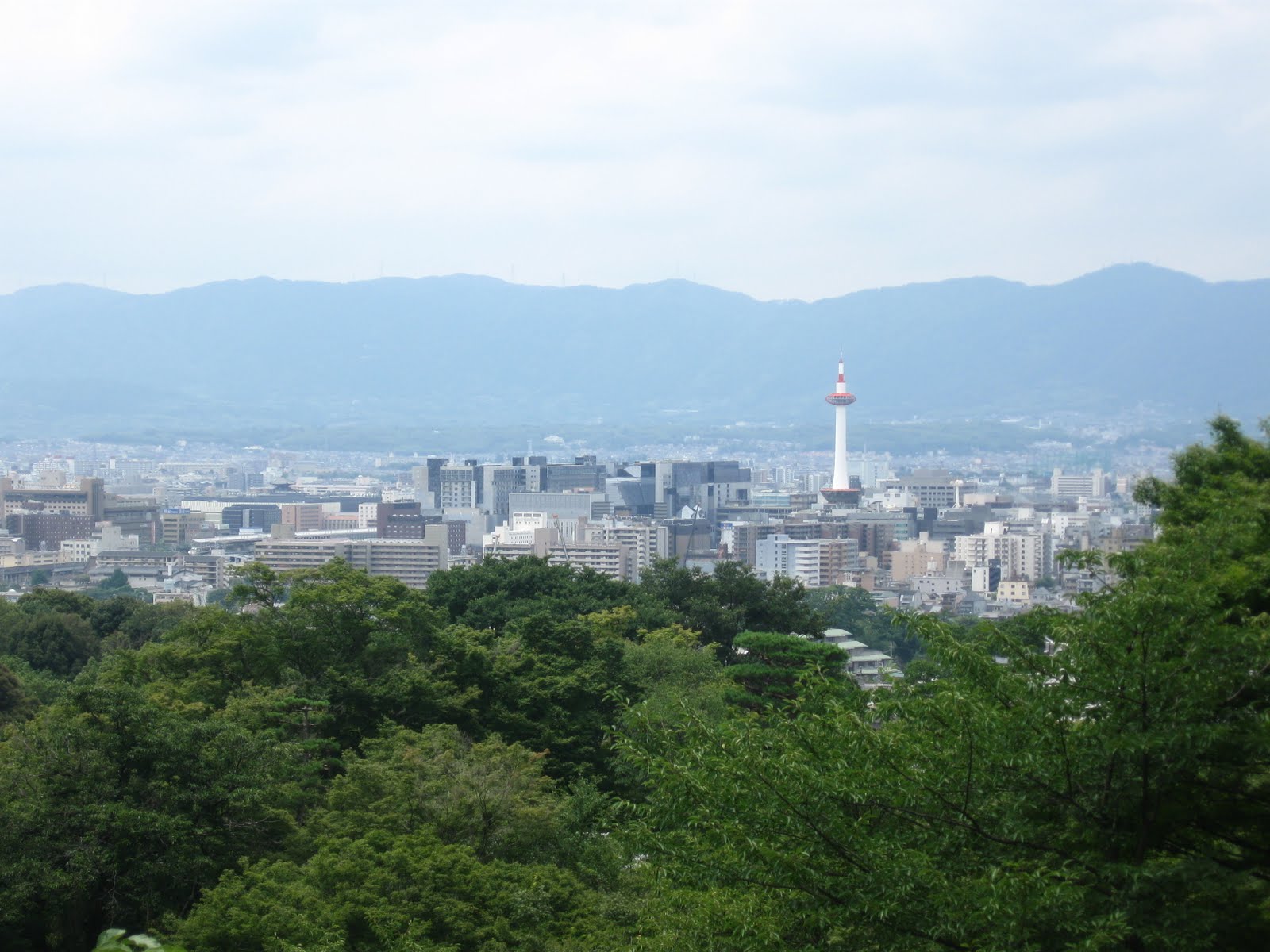
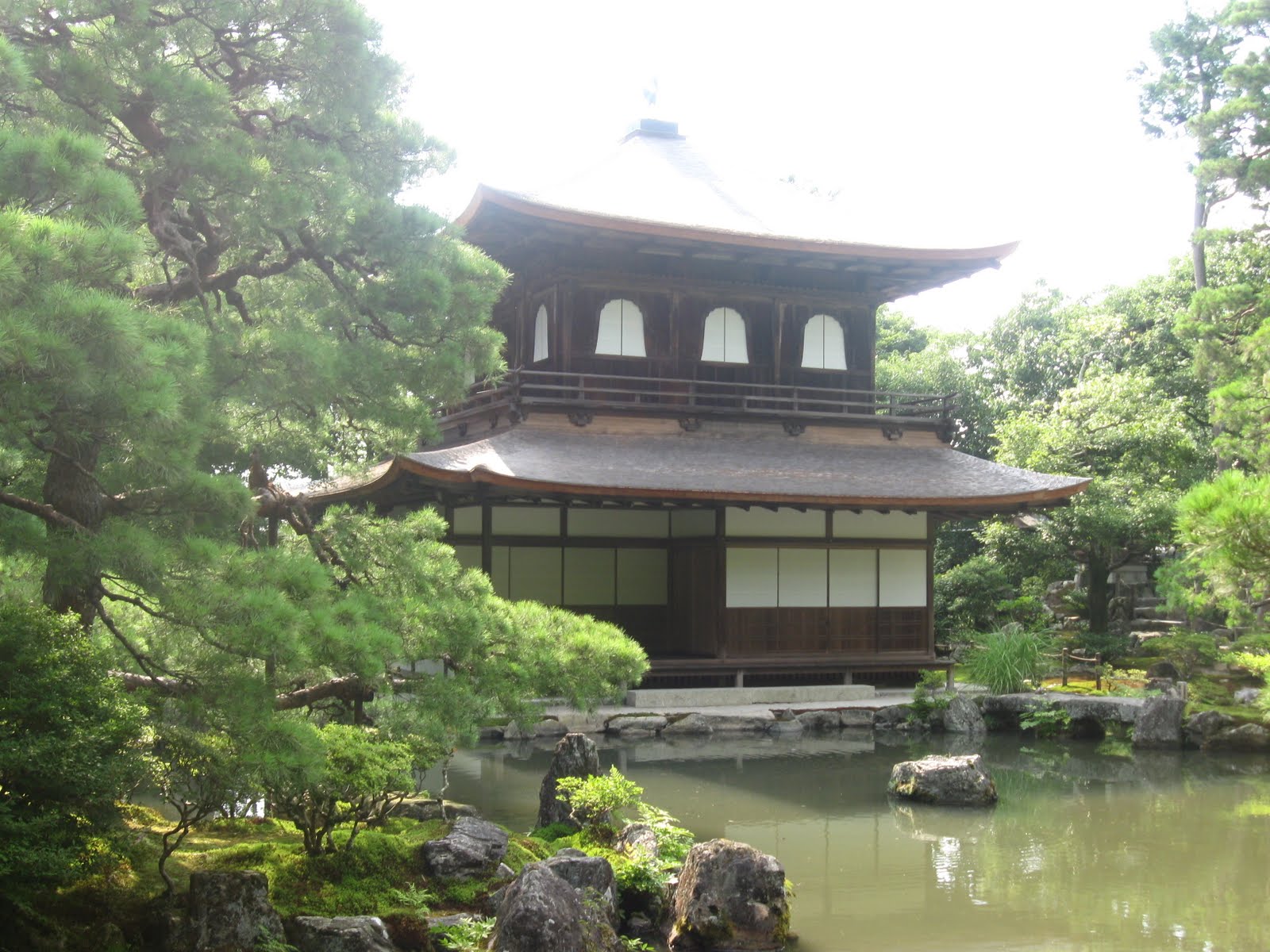
Top Ten Things We Did
I just have a quick point of clarification before I commence with the list. This list is of the top non-temple, non-shrine things we did in Japan. Since I devoted an entire post to temples and shrines, I figured I could talk about a more diverse array of things by not including them on this list.
10.) Tokyo National Museum
Though it doesn't compare to the cities I visited in Western Europe, Tokyo has a solid museum scene, and we were able to visit a few museums on the back end of our trip. Most of Tokyo's museums are located in Ueno Park. This massive Park also features temples, shrines, and a zoo. We walked by the Tokyo Museum of Western Art, which had several Rodin sculptures displayed outside. We also passed the Museum of Science and Nature that had a life-size blue whale statue outside. The complex we visited was the Tokyo National Museum. This complex actually consists of five separate museums, and we were able to check out three of them.
The first we visited was a small museum that housed Buddhist treasures from the Horyu-Ji Temple in Nara. The treasures feature elaborate statues, masks, and other artifacts. This exhibition skimped on the English captions, so we were able to view the artifacts quickly, and move on to the next museum. The second museum we checked out was called the Heiseikan, which featured archeological artifacts from Japan from the prehistoric era to the modern era. It houses pottery, weapons, statues, and also contains a great English narrative of the history and different eras of Japan. The final museum we went to was the Honkan, the largest collection of Japanese art and artifacts in the world. It consists of two floors, organized thematically in roughly chronological order. Unfortunately, several works housed in the museum we were looking forward to seeing we not displayed, including the Great Wave off Kanagawa. I included some examples of my favorite pieces from the museum.
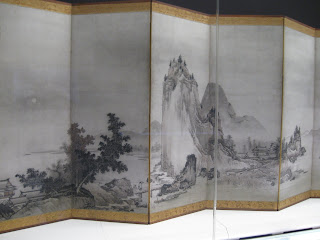 There were several of these faux-wall paintings with intricate Japanese landscapes on them.
 The museum also contained some cool samurai armor.
9.) Tokyo Parks and Gardens
Tokyo has many parks and gardens well worth strolling through. In addition to Ueno, we went to the Hama Detached Palace Garden and the East Gardens of the Imperial Palace. On the last day of our trip, Antonio wanted to check out the Museum of Western Art and Alexa and I were museumed out from the day before. Alexa and I decided to take a walk through the Detached Palace Garden. This garden (more of a park) is right in the middle of downtown Tokyo, and you can get good views of the skyline contrasting with the more natural elements of the park. There is a small lake/large pond with an island teahouse.


The Imperial Palace is only open to the public twice a year, and we were not there on one of those days. The outer grounds, however, are open to the public on a regular basis. We were able to view the walls, the site of the former keep (now destroyed), and the famous East gardens. Japanese gardens often feature water, rocks, trees, and emphasize natural elements rather than minimizing them. At one point on our trip Antonio made the point that the gardens he saw at Versailles demonstrated man's dominance over nature, while traditional Japanese gardens demonstrated man's harmonious relationship with it. Deep stuff.


8.) Strolling through Gion in Kyoto
On our last day in Kyoto after visiting Kiyomizu-Dera Temple, we walked north to see the historic district of Gion. While most of Kyoto is fully modernized (with the exception of the temples and shrines obviously), Gion is a quaint throwback to a bygone era of Japan. I enjoyed just walking the cobblestone roads, gazing at traditional homes, and peering into the windows of artisan boutique stores. Gion is home to many of the Geisha of Kyoto, but we did not see any. Geisha, contrary to popular belief, are not prostitutes, but "women of the arts" who are highly educated and are capable of holding an intelligent conversation with their male clients. I would have liked to have had more time to explore Gion, but by that time we were getting tired and hungry. The hour and a half we did spend there though was very pleasant.


7.) Walking Tour of Nara
The day before we went to Nara we decided we wanted to join a walking tour of the city for 2000 yen (about $23-25). There are no reservations; you basically just show up, give the guide the money, and take the tour. After visiting Fushimi Shrine in the morning (see previous post) we realized that the express train from Kyoto to Nara did not stop in Fushimi. This meant that instead of a 40 minute train ride, we were looking at an hour and a half train ride. Fushimi was close enough to Kyoto that we decided to backtrack and just get on the express in Kyoto. This made us about 45 minutes later than we had planned, and the tour group was supposed to meet at 10:15. By the time we got to Nara station it was about 10:35, so we assumed the tour would be long gone. Yet when we got there, there was a middle-aged to older woman holding the sign for the tour we had planned on joining. No one else had showed up. We told her we were interested, and, voila a private tour of the city. Nara was the first capital of Japan and it is home to Todai-ji (previous post), several other shrines and temples, a virgin forest, and tame deer (don't worry they will be featured in the next post). Our guide walked us through it all, answering all of our questions along the way. Here is the only picture I managed to get of her:
 She showed us the proper way to purify yourself before entering a Shinto Shrine. You must wash each hand separately, rinse your mouth, then empty the remaining water in the ladle. I am purifying myself below before entering Yasaka Shrine. The Shrine is on the edge of the old growth forest. The shrine itself was pretty standard, but there are thousands of stone lanterns on its grounds, which are only lit on rare occasions.


One of the perks of a guide is that she can show you some interesting things you otherwise would have walked right by. We stopped briefly in a museum and got to try out an earthquake simulator. Alexa caught my experience on film.
Another interesting fact that our guide explained to us is that many pagodas (including the one we visited in Nara) are built with each level structurally independent from the one below it. This means that the only thing that holds the pagoda together is a large pole in the middle. This makes the pagodas more "earthquake-proof."
6.) Shinto Purification Ritual
After visiting the Golden Pavilion in Kyoto, we headed to Shimogamo Shrine. This shrine is also a UNESCO site. Upon arriving, there were several food stalls and carnival-like booths leading up to the shrine. We were confused, and figured there must be a special event going on. When we arrived at the main shrine, it was very crowded and there were large tents set up next to a man-made stream running under a bridge. For 200 Yen, you could get a candle, walk through the stream, and light another candle at the end. Without knowing what we were doing at all, we paid the small fee and participated in the ritual. The water was freezing, which felt very nice because the temperatures for the entirety of our trip were in the low to mid 90s. After walking through the stream and drying our feet, I asked someone what we had just done (we were joking that we had all just converted to Shintoism). A man explained that this was an annual purification ritual.


Here are shots of Antonio and Alexa during the ritual.


More pictures of the ritual.
5.) Nijo Castle
Nijo Castle in Kyoto was home to the Shogunate during Japan's feudal era that lasted up until 1867. The castle is surrounded by walls and a moat. The keep burned down long ago, but you can climb up to where it once stood and get a great view of the grounds. You can also visit the old living quarters. The interior is fairly simple, but some of the gates were impressive.
 My favorite part of the castle, however, was the small garden outside of the living quarters. It was one of the most (if not the most) beautiful gardens we saw on our trip.


4.) Tsujiki Fish Market and Sushi Breakfast
Those of you who know me and know my eating habits are aware that I am not the biggest seafood fan in the world. Before going to Japan, I had never tried sushi. My theory was that if I didn't like seafood when it was cooked, I wouldn't like it raw. But I decided well before the trip that I could not go to Japan and not try sushi. The Tsujiki Fish Market in Tokyo was on our itinerary at the back end of the trip. Sushi is a little bit on the pricey side there, so before dropping money on the highest quality sushi in the world, I decided to try a low-budget option to see if the splurge would be worth it. In Kyoto we ate at a conveyor belt sushi restaurant, so I could sample hand made sushi at a cheap cost. I tried a tuna roll first, and the only thing I didn't like was the seaweed wrap. I had had seaweed in Korea because it is a large part of the diet here, so I was able to isolate the flavor I didn't like. The nest time around, I went for tuna sashimi, just fish, rice, and wasabi. I added soy sauce and fresh ginger, and it was very good. The ginger, soy, and wasabi flavors dominated and the tuna was not at all fishy. I'm still not sure I like seafood, but tuna sashimi with all the fixin's is delicious.
Knowing that I was going to like my meal made me more comfortable splurging at Tsujiki, the world's largest fish market. We visited the market relatively early in the morning in order to see the hustle and bustle. The market is along the Sumida River and consists of several large warehouses. These warehouses are full of people transporting, slicing, and selling all kinds of seafood. While visiting you have to be very careful not to get run over by small vehicles speeding around the warehouse taking the fish from one stop to the next.


Left: a seafood warehouse Right: Large prawns for sale


Cutting up the Tuna.
After roaming around the market, we waited outside a small sushi restaurant for about a half hour to have a small sushi breakfast. Below on the left is my tuna sashimi. On the right is a picture of the conveyor belt restaurant we ate at in Kyoto. You just pick up the plate that looks good to you as it comes by, and they charge you at the end of the meal. I think more meals back in the US should be served in conveyor belt form.


3.) Himeji Castle
After staying one night in Kobe, we stopped in Himeji on the way to Hiroshima. The only reason to stop in Himeji is the majestic castle, the most beautiful and best preserved castle of feudal Japan. The Himeji Castle could easily have contended for the top spot on this list, but unfortunately it was under renovation. Seeing a giant crane and scaffolding alongside the historic castle detracted from its beauty significantly. We couldn't go inside the keep either, as that was under renovation. We toured the halls along the walls, but these were pretty empty. I'm happy we stopped here, but it was disappointing not to be able to visit the whole castle or marvel at the grandeur of a scaffolding-less keep. Nonetheless, the fact that the castle is still so high on the list, despite the setbacks, tells you how great it truly is.


2.) Somber Reflection at Hiroshima
Hiroshima may be the one stop on my trip that needs little introduction. As you all know, the first atomic bomb was dropped here at the end of World War II, leading to (after another dropping at Nagasaki) the surrender of the Japanese. The bombing instantly killed 80,000 people and wiped out an area with a two-mile radius. If you include those who lost their lives due to the effects of radiation, the death toll is closer to 140,000. The only building that was spared was the A-Bomb Dome (below right), because it was almost directly below the hypocenter of the blast.
Today, the city center has been turned in Peace Park (below left), with several monuments to those killed in the blast and a flame that will burn until the last nuclear weapon is gone from the earth. South of the park is a museum which gives an account of the events leading up to the bomb's dropping and several chilling first hand accounts from survivors through video and art.


Just past the A-Bomb Dome, you can turn down a discreet ally and visit the exact hypocenter, with nothing but a small plaque acknowledging what happened.

I am aware of the historical circumstances surrounding the dropping of the bomb, and how costly many of the alternatives would have been to both Americans and Japanese civilians. Nevertheless, I felt somewhat guilty walking the streets of Hiroshima as an American. Perhaps it says something about the nature of total war that something as horrific as the the dropping of the atom bomb was settled upon as the "least bad" option.
1.) Kobe Beef
I decided that I had to end on a positive note, so the best experience of my trip was our Kobe Beef dinner. Kobe is famous for its beef and also for the outrageous prices charged for it. We decided that we wanted to eat Kobe Beef in Kobe and were willing to bite the bullet and pay for it. After walking around Kyoto for a day, our hostel let us shower, even though we had already checked out. We changed into our nice clothes on the train to Kobe, so we wouldn't get them sweaty hauling our luggage from the hostel to the train station. The restaurant stored our luggage for us, because we didn't have time to stop at a hotel and drop it off before our reservation. We glanced at the menu, which offered a variety of courses, cuts, weights. A guidebook had recommended the sirloin, so we settled on that and opted to pay 2000 extra yen for a five course meal and aperitif. Antonio and Alexa opted for 150 grams of meat, which was the second highest amount of sirloin you could buy. I, on the other hand, came here for the meat. I was going get the most amount of beef possible, so I ordered the 200 gram serving (still only about 7 ounces) for an extra 2800 Yen.
The hors d'oeuvres, salad, and soup were good, but nothing I would pay more than $25-30 for at a nice five course meal back home. The beef was going to make or break my experience. I was excited, but also skeptical that anything could be delicious enough to warrant a $170 price tag. The beef was brought out and cooked before our eyes along with vegetables and garlic chips. It was perfectly marbled. The cows used are raised locally, grass-fed, and massaged regularly.


When the beef was cooked the chef placed it on a plate in front of me and I slowly picked up the fork, closed my eyes, and placed a small bite in my mouth. The beef seemed to melt away. It was so tender. As a fast eater, I had to slow down my usual eating pace incredibly to savor each individual meat morsel. When it was all said and done, we agreed that it was worth the price.
Here is the follow up meal the next morning. McDonald's in Korea don't have McGriddles, so when I saw them on the menu I had to buy one.

Though it doesn't compare to the cities I visited in Western Europe, Tokyo has a solid museum scene, and we were able to visit a few museums on the back end of our trip. Most of Tokyo's museums are located in Ueno Park. This massive Park also features temples, shrines, and a zoo. We walked by the Tokyo Museum of Western Art, which had several Rodin sculptures displayed outside. We also passed the Museum of Science and Nature that had a life-size blue whale statue outside. The complex we visited was the Tokyo National Museum. This complex actually consists of five separate museums, and we were able to check out three of them.
The first we visited was a small museum that housed Buddhist treasures from the Horyu-Ji Temple in Nara. The treasures feature elaborate statues, masks, and other artifacts. This exhibition skimped on the English captions, so we were able to view the artifacts quickly, and move on to the next museum. The second museum we checked out was called the Heiseikan, which featured archeological artifacts from Japan from the prehistoric era to the modern era. It houses pottery, weapons, statues, and also contains a great English narrative of the history and different eras of Japan. The final museum we went to was the Honkan, the largest collection of Japanese art and artifacts in the world. It consists of two floors, organized thematically in roughly chronological order. Unfortunately, several works housed in the museum we were looking forward to seeing we not displayed, including the Great Wave off Kanagawa. I included some examples of my favorite pieces from the museum.
 There were several of these faux-wall paintings with intricate Japanese landscapes on them.
 The museum also contained some cool samurai armor.
9.) Tokyo Parks and Gardens
Tokyo has many parks and gardens well worth strolling through. In addition to Ueno, we went to the Hama Detached Palace Garden and the East Gardens of the Imperial Palace. On the last day of our trip, Antonio wanted to check out the Museum of Western Art and Alexa and I were museumed out from the day before. Alexa and I decided to take a walk through the Detached Palace Garden. This garden (more of a park) is right in the middle of downtown Tokyo, and you can get good views of the skyline contrasting with the more natural elements of the park. There is a small lake/large pond with an island teahouse.


The Imperial Palace is only open to the public twice a year, and we were not there on one of those days. The outer grounds, however, are open to the public on a regular basis. We were able to view the walls, the site of the former keep (now destroyed), and the famous East gardens. Japanese gardens often feature water, rocks, trees, and emphasize natural elements rather than minimizing them. At one point on our trip Antonio made the point that the gardens he saw at Versailles demonstrated man's dominance over nature, while traditional Japanese gardens demonstrated man's harmonious relationship with it. Deep stuff.


8.) Strolling through Gion in Kyoto
On our last day in Kyoto after visiting Kiyomizu-Dera Temple, we walked north to see the historic district of Gion. While most of Kyoto is fully modernized (with the exception of the temples and shrines obviously), Gion is a quaint throwback to a bygone era of Japan. I enjoyed just walking the cobblestone roads, gazing at traditional homes, and peering into the windows of artisan boutique stores. Gion is home to many of the Geisha of Kyoto, but we did not see any. Geisha, contrary to popular belief, are not prostitutes, but "women of the arts" who are highly educated and are capable of holding an intelligent conversation with their male clients. I would have liked to have had more time to explore Gion, but by that time we were getting tired and hungry. The hour and a half we did spend there though was very pleasant.


7.) Walking Tour of Nara
The day before we went to Nara we decided we wanted to join a walking tour of the city for 2000 yen (about $23-25). There are no reservations; you basically just show up, give the guide the money, and take the tour. After visiting Fushimi Shrine in the morning (see previous post) we realized that the express train from Kyoto to Nara did not stop in Fushimi. This meant that instead of a 40 minute train ride, we were looking at an hour and a half train ride. Fushimi was close enough to Kyoto that we decided to backtrack and just get on the express in Kyoto. This made us about 45 minutes later than we had planned, and the tour group was supposed to meet at 10:15. By the time we got to Nara station it was about 10:35, so we assumed the tour would be long gone. Yet when we got there, there was a middle-aged to older woman holding the sign for the tour we had planned on joining. No one else had showed up. We told her we were interested, and, voila a private tour of the city. Nara was the first capital of Japan and it is home to Todai-ji (previous post), several other shrines and temples, a virgin forest, and tame deer (don't worry they will be featured in the next post). Our guide walked us through it all, answering all of our questions along the way. Here is the only picture I managed to get of her:
 She showed us the proper way to purify yourself before entering a Shinto Shrine. You must wash each hand separately, rinse your mouth, then empty the remaining water in the ladle. I am purifying myself below before entering Yasaka Shrine. The Shrine is on the edge of the old growth forest. The shrine itself was pretty standard, but there are thousands of stone lanterns on its grounds, which are only lit on rare occasions.


One of the perks of a guide is that she can show you some interesting things you otherwise would have walked right by. We stopped briefly in a museum and got to try out an earthquake simulator. Alexa caught my experience on film.
Another interesting fact that our guide explained to us is that many pagodas (including the one we visited in Nara) are built with each level structurally independent from the one below it. This means that the only thing that holds the pagoda together is a large pole in the middle. This makes the pagodas more "earthquake-proof."
6.) Shinto Purification Ritual
After visiting the Golden Pavilion in Kyoto, we headed to Shimogamo Shrine. This shrine is also a UNESCO site. Upon arriving, there were several food stalls and carnival-like booths leading up to the shrine. We were confused, and figured there must be a special event going on. When we arrived at the main shrine, it was very crowded and there were large tents set up next to a man-made stream running under a bridge. For 200 Yen, you could get a candle, walk through the stream, and light another candle at the end. Without knowing what we were doing at all, we paid the small fee and participated in the ritual. The water was freezing, which felt very nice because the temperatures for the entirety of our trip were in the low to mid 90s. After walking through the stream and drying our feet, I asked someone what we had just done (we were joking that we had all just converted to Shintoism). A man explained that this was an annual purification ritual.


Here are shots of Antonio and Alexa during the ritual.


More pictures of the ritual.
5.) Nijo Castle
Nijo Castle in Kyoto was home to the Shogunate during Japan's feudal era that lasted up until 1867. The castle is surrounded by walls and a moat. The keep burned down long ago, but you can climb up to where it once stood and get a great view of the grounds. You can also visit the old living quarters. The interior is fairly simple, but some of the gates were impressive.
 My favorite part of the castle, however, was the small garden outside of the living quarters. It was one of the most (if not the most) beautiful gardens we saw on our trip.


4.) Tsujiki Fish Market and Sushi Breakfast
Those of you who know me and know my eating habits are aware that I am not the biggest seafood fan in the world. Before going to Japan, I had never tried sushi. My theory was that if I didn't like seafood when it was cooked, I wouldn't like it raw. But I decided well before the trip that I could not go to Japan and not try sushi. The Tsujiki Fish Market in Tokyo was on our itinerary at the back end of the trip. Sushi is a little bit on the pricey side there, so before dropping money on the highest quality sushi in the world, I decided to try a low-budget option to see if the splurge would be worth it. In Kyoto we ate at a conveyor belt sushi restaurant, so I could sample hand made sushi at a cheap cost. I tried a tuna roll first, and the only thing I didn't like was the seaweed wrap. I had had seaweed in Korea because it is a large part of the diet here, so I was able to isolate the flavor I didn't like. The nest time around, I went for tuna sashimi, just fish, rice, and wasabi. I added soy sauce and fresh ginger, and it was very good. The ginger, soy, and wasabi flavors dominated and the tuna was not at all fishy. I'm still not sure I like seafood, but tuna sashimi with all the fixin's is delicious.
Knowing that I was going to like my meal made me more comfortable splurging at Tsujiki, the world's largest fish market. We visited the market relatively early in the morning in order to see the hustle and bustle. The market is along the Sumida River and consists of several large warehouses. These warehouses are full of people transporting, slicing, and selling all kinds of seafood. While visiting you have to be very careful not to get run over by small vehicles speeding around the warehouse taking the fish from one stop to the next.


Left: a seafood warehouse Right: Large prawns for sale


Cutting up the Tuna.
After roaming around the market, we waited outside a small sushi restaurant for about a half hour to have a small sushi breakfast. Below on the left is my tuna sashimi. On the right is a picture of the conveyor belt restaurant we ate at in Kyoto. You just pick up the plate that looks good to you as it comes by, and they charge you at the end of the meal. I think more meals back in the US should be served in conveyor belt form.


3.) Himeji Castle
After staying one night in Kobe, we stopped in Himeji on the way to Hiroshima. The only reason to stop in Himeji is the majestic castle, the most beautiful and best preserved castle of feudal Japan. The Himeji Castle could easily have contended for the top spot on this list, but unfortunately it was under renovation. Seeing a giant crane and scaffolding alongside the historic castle detracted from its beauty significantly. We couldn't go inside the keep either, as that was under renovation. We toured the halls along the walls, but these were pretty empty. I'm happy we stopped here, but it was disappointing not to be able to visit the whole castle or marvel at the grandeur of a scaffolding-less keep. Nonetheless, the fact that the castle is still so high on the list, despite the setbacks, tells you how great it truly is.


2.) Somber Reflection at Hiroshima
Hiroshima may be the one stop on my trip that needs little introduction. As you all know, the first atomic bomb was dropped here at the end of World War II, leading to (after another dropping at Nagasaki) the surrender of the Japanese. The bombing instantly killed 80,000 people and wiped out an area with a two-mile radius. If you include those who lost their lives due to the effects of radiation, the death toll is closer to 140,000. The only building that was spared was the A-Bomb Dome (below right), because it was almost directly below the hypocenter of the blast.
Today, the city center has been turned in Peace Park (below left), with several monuments to those killed in the blast and a flame that will burn until the last nuclear weapon is gone from the earth. South of the park is a museum which gives an account of the events leading up to the bomb's dropping and several chilling first hand accounts from survivors through video and art.


Just past the A-Bomb Dome, you can turn down a discreet ally and visit the exact hypocenter, with nothing but a small plaque acknowledging what happened.

I am aware of the historical circumstances surrounding the dropping of the bomb, and how costly many of the alternatives would have been to both Americans and Japanese civilians. Nevertheless, I felt somewhat guilty walking the streets of Hiroshima as an American. Perhaps it says something about the nature of total war that something as horrific as the the dropping of the atom bomb was settled upon as the "least bad" option.
1.) Kobe Beef
I decided that I had to end on a positive note, so the best experience of my trip was our Kobe Beef dinner. Kobe is famous for its beef and also for the outrageous prices charged for it. We decided that we wanted to eat Kobe Beef in Kobe and were willing to bite the bullet and pay for it. After walking around Kyoto for a day, our hostel let us shower, even though we had already checked out. We changed into our nice clothes on the train to Kobe, so we wouldn't get them sweaty hauling our luggage from the hostel to the train station. The restaurant stored our luggage for us, because we didn't have time to stop at a hotel and drop it off before our reservation. We glanced at the menu, which offered a variety of courses, cuts, weights. A guidebook had recommended the sirloin, so we settled on that and opted to pay 2000 extra yen for a five course meal and aperitif. Antonio and Alexa opted for 150 grams of meat, which was the second highest amount of sirloin you could buy. I, on the other hand, came here for the meat. I was going get the most amount of beef possible, so I ordered the 200 gram serving (still only about 7 ounces) for an extra 2800 Yen.
The hors d'oeuvres, salad, and soup were good, but nothing I would pay more than $25-30 for at a nice five course meal back home. The beef was going to make or break my experience. I was excited, but also skeptical that anything could be delicious enough to warrant a $170 price tag. The beef was brought out and cooked before our eyes along with vegetables and garlic chips. It was perfectly marbled. The cows used are raised locally, grass-fed, and massaged regularly.


When the beef was cooked the chef placed it on a plate in front of me and I slowly picked up the fork, closed my eyes, and placed a small bite in my mouth. The beef seemed to melt away. It was so tender. As a fast eater, I had to slow down my usual eating pace incredibly to savor each individual meat morsel. When it was all said and done, we agreed that it was worth the price.
Here is the follow up meal the next morning. McDonald's in Korea don't have McGriddles, so when I saw them on the menu I had to buy one.